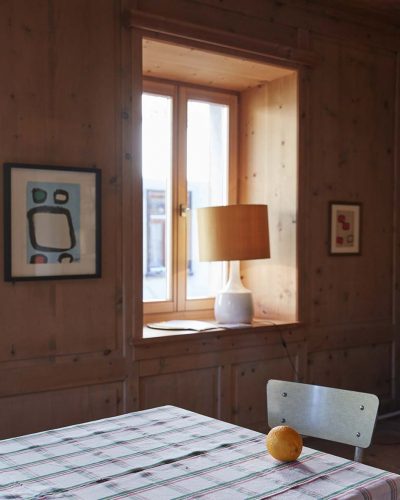
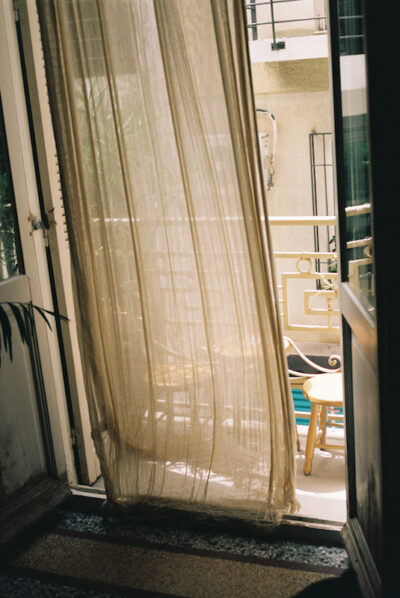
What drives a young Polish woman raised in Paris to purchase an old house in the village of Hasparren, thirty minutes from Biarritz, and make it the setting for her hospitality project and artists’ residence? “The desire to understand things,” Célia replies, sitting in the living room of her guesthouse, steeped in the charm of simplicity. Maison Gamboia is above all a cultural project, where every detail refers back to Basque traditions, craftsmanship, and the local way of life. The search for depth is the thread running through this home. We are at the foot of Mount Ursuya, in a borderland that Célia seeks every day to understand and to share with her guests. The house takes its historic name from a Basque word meaning “river bend.” Built in 1656, it has welcomed various owners over the centuries, including the family of shoemakers who owned the Etchevers factory. In 1958, two sisters, Marguerite, a worker in a shoe factory, and Amélie Dabbadie, a nurse, purchased the house and moved there with their parents. It was from this family’s heirs that Célia acquired the property, restoring it while remaining faithful to its original architecture.
Furnishings purchased at flea markets coexist with works by artists who have taken part in the residency program. In the rooms, one finds a bundle of sage, a carafe of rosemary-infused water, handmade soap, and towels tied with a rope ribbon. The house is embraced by an orchard, a vegetable garden, and a garden shaped by permaculture principles, where aromatic herbs, edible flowers, medicinal plants, and dye plants are cultivated. The town of Hasparren, with its steep lanes and half-timbered houses, can be reached on foot. Here, everything invites exploration and connection. Célia will recommend having lunch at the Komeiteko Borda inn and dinner at Elizaberri Etxeberria or Maison de Pierre. She will suggest visiting the workshop that creates the wonderful ceramics used to set the table every morning; having a coffee at the market while listening to Basque songs; tasting bread and pastries made with local flours from the Ogi Bihia bakery; sampling cheeses from nearby farms at the Zarea shop; discovering the selection at the Les Vins de Vincent wine shop and delicatessen; visiting the Art Deco chapel; and taking a walk through the woods, surrounded by sheep and pottok, a breed of pony typical of these countryside landscapes. Into the local cultural fabric, Célia weaves the vision of the artists from the La Réciproque association, creating connections between artistic practices, artisanal knowledge, historical research, and an understanding of the land. Exhibitions, readings, workshops, concerts, and conversations transform the house into that open, fluid, and enchanting space that we would all wish to have in our own neighbourhood.
Words by Laura Taccari. Photography by Emmy Martens.